Ep.91 Business and Economic Lessons Behind the Bristol Pound
With Diana Finch

Episode Description:
This episode features Diana Finch, former Managing Director of the Bristol Pound CIC, who discusses the development, challenges, and lessons learned from running a pioneering local currency. Diana shares her journey of transitioning into the non-profit sector to address economic issues “upstream,” explaining how the Bristol Pound was launched to keep wealth circulating locally and build community resilience. She emphasises that while the initiative captured passionate early support, scaling it required overcoming intense technical complexity and deep-seated operational friction for shoppers and independent traders alike.
The conversation explores the structural realities of running a dual digital and paper currency system. Diana explains the complex regulatory integrations required with the local credit union, alongside point-of-sale accounting headaches for small business owners. She also details the dilemma of expanding beyond a highly ideologically driven core group (the “hair shirt” adopters), noting how technical barriers, strict ideological messaging, and grant-funding constraints hampered the broad adoption needed for long-term viability.
Finally, the discussion covers Diana’s broader vision for systemic economic change and non-financial metrics. She references behavioural economics to show how monetary framing alters human motivation, outlining concepts like tracking community goodwill and gift economies to prioritise social and environmental impact. She concludes by urging listeners and business owners to think beyond standard market compliance, embrace ground-up “Thrutopian” changes, and rethink how true value is measured.
Bristol pound Legacy website: bristolpoundlegacy.info/
Diana Finch website: dianafinch.info/
Diana Finch Social Channel:
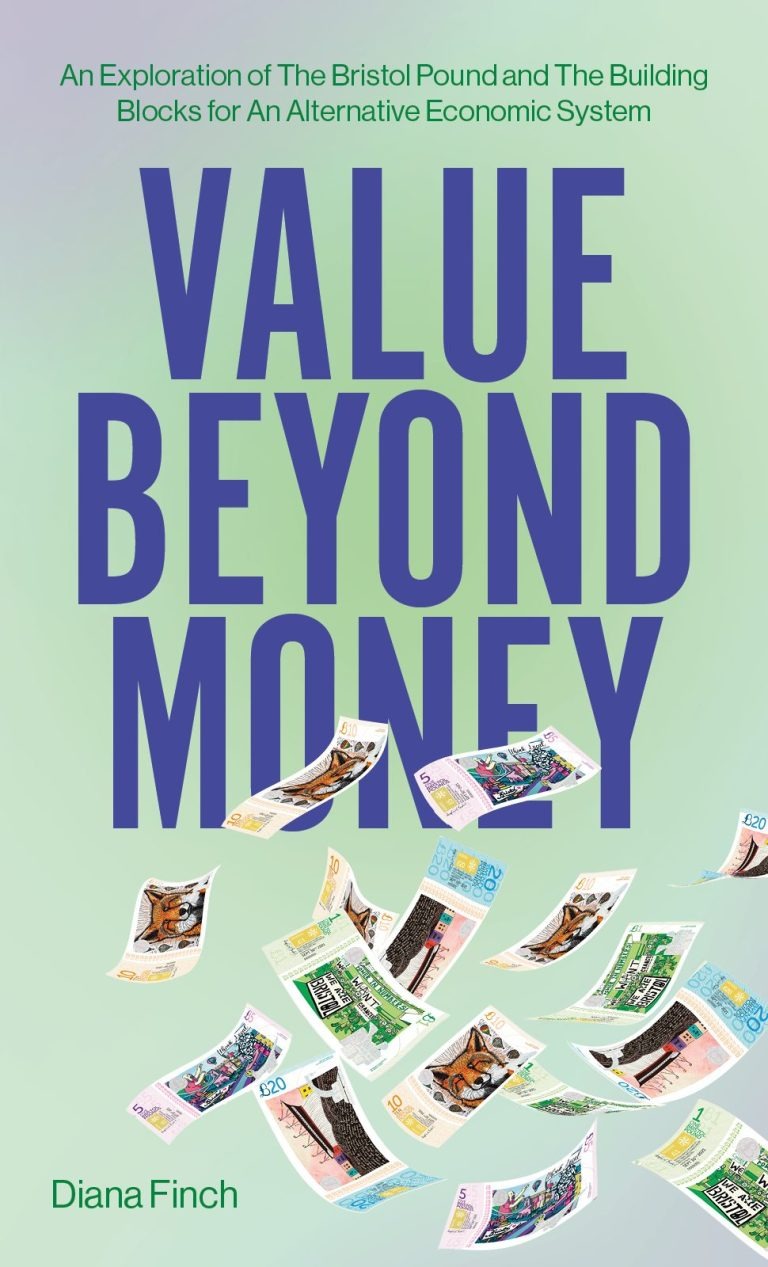
Read Value Beyond Money by Diana Finch
Listen to the episode
Episode Time Codes
00:00 Welcome
00:32 Introduction to Diana Finch
02:30 About the Bristol Pound
06:53 Challenges | Funding and systems
13:40 Why get digital currency in place?
15:01 The challenges with finding funding
16:39 What is mutual credit?
18:22 Bristol Pound and businesses
22:14 Bristol Pound and customers
28:23 Solution to the Bristol Pound issues | Bristol Pay
31:03 Three horizons model
35:57 How we measure value and the impact of assigning monetary value
44:34 How this thinking helps small businesses
46:36 The role of local government & how they can use local currencies
51:37 How some small insights into the local economy can benefit businesses
52:22 Diana’s closing thoughts
Videos
Why the Bristol Pound Failed
Three Purposes of the Bristol Pound
Seeing Flows of Value
From Early Adopters to Mass Audiences
Key takeaways
Differentiate Your Brand Through Unmatched Personal Touches
You cannot win a price war against industry giants who have unlimited budgets and economies of scale. Trying to compete with massive corporations on their terms is a losing strategy for independent businesses. Instead, small businesses must leverage the one advantage big corporates can never replicate: genuine, human connection. Diana notes that value extends far beyond monetary transactions, pointing to how personal gestures and thoughtful relationships build deep-rooted loyalty.
Eliminate Operational Friction to Cross the Adoption Chasm
The Bristol Pound struggled to scale because technical hurdles, staff retraining burdens, and point-of-sale accounting headaches created too much day-to-day friction for local traders. To take your brand beyond a small niche of early adopters, you must relentlessly streamline your processes, remove every barrier to entry, and ensure that doing business with you is as effortless and rewarding as possible.
Understand How Pricing Alters Customer Psychology
You cannot motivate your customers or employees effectively if you treat every interaction as a purely financial transaction. Attaching a rigid monetary price tag to a product, service, or perk fundamentally changes how people evaluate its worth. Diana highlights behavioural research showing that people will often work harder or care more when an experience is framed as a thoughtful gift or a collaborative favour rather than a transaction.
References
Check out Diana’s other podcast appearances and related publications on her website: Diana’s Website
Including: Scotonomics podcast talking to William Thomson: “Value Beyond Money – the story of the Bristol Pound“
Radio Bath podcast, talking to Richard Beauvoisin, A Story To Tell – Diana Finch – Author
Research mentioned in the episode:
Dan Ariely and James Heyman Research: Effort for Payment | A Tale of Two Markets
Arthur Brock Current-see concept (things that make visible the the flow of non-financial value): Arthur Brock’s Website